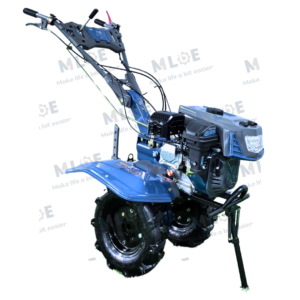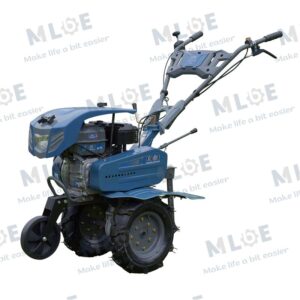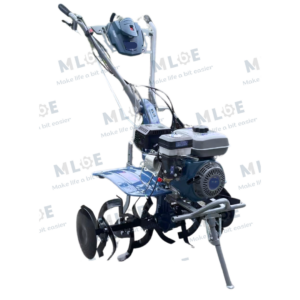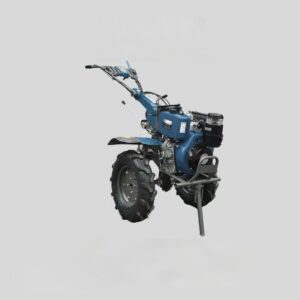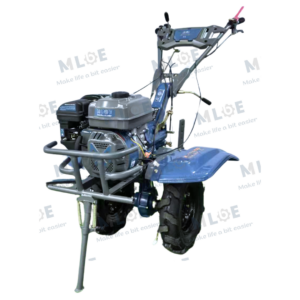
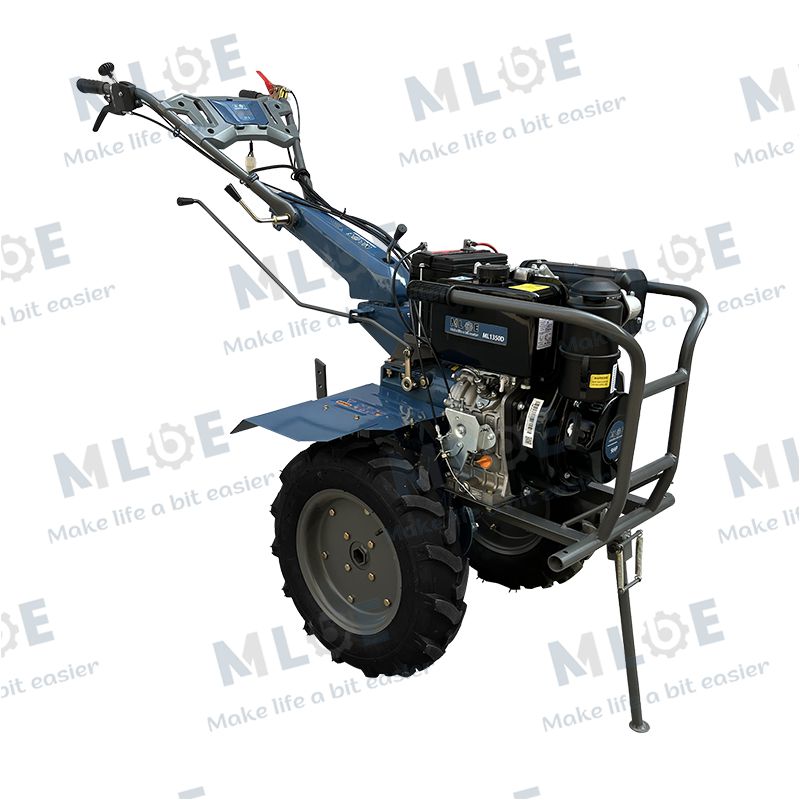
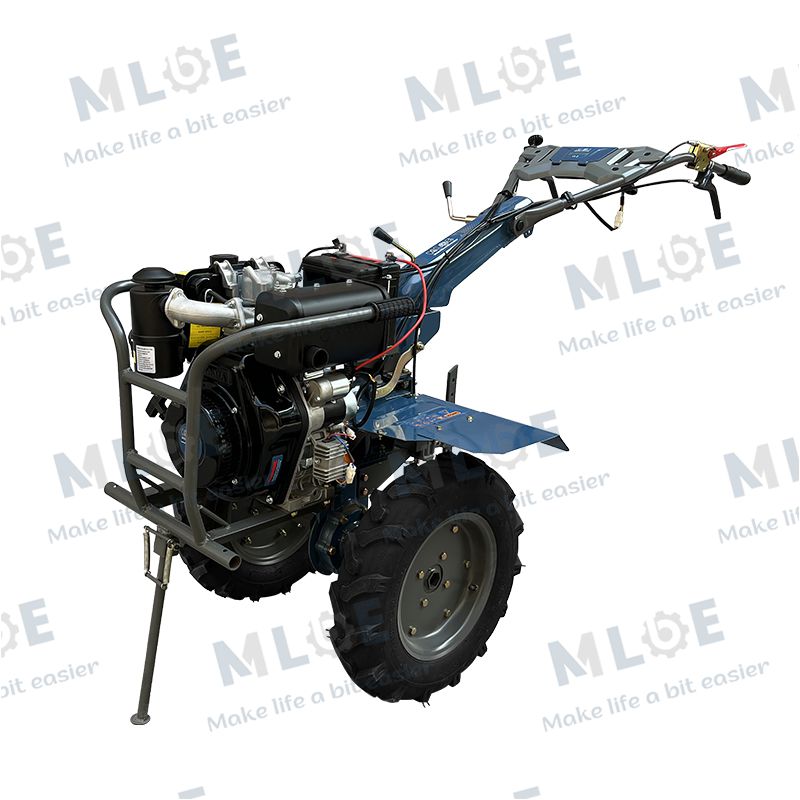
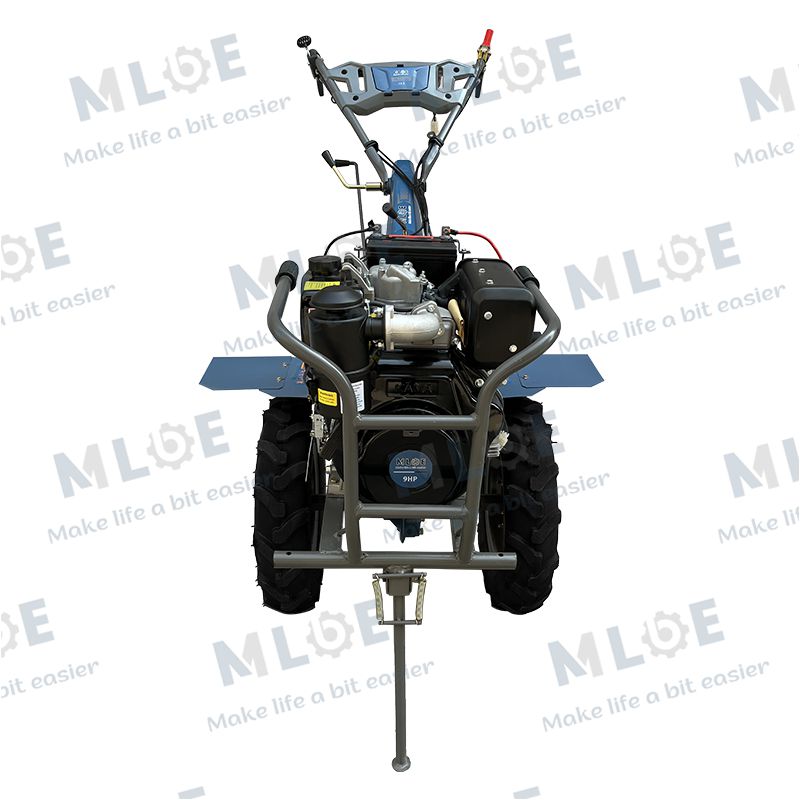
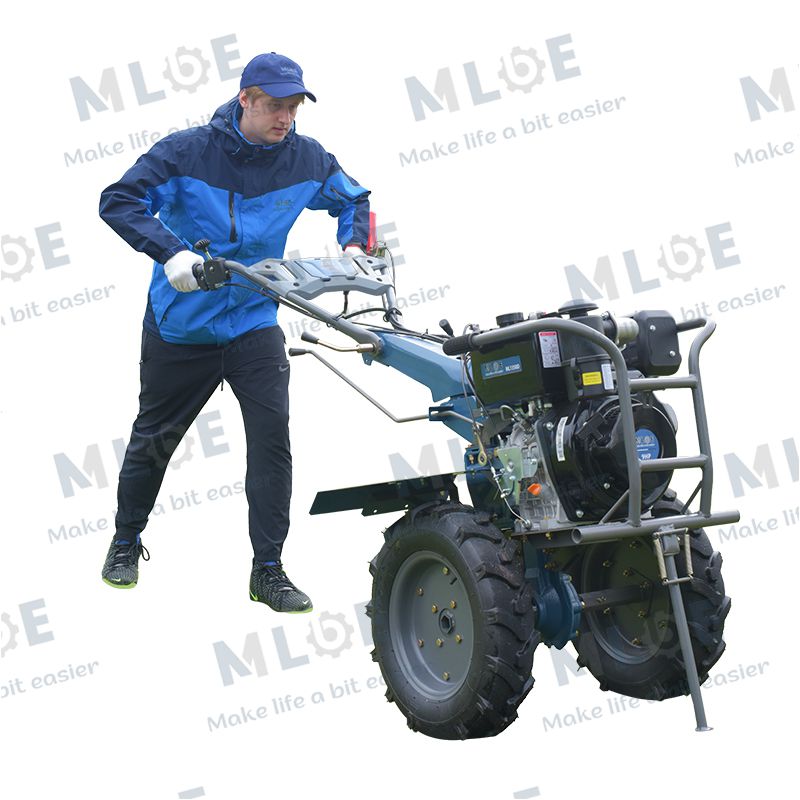
ML1350DE: blade and starting options
Which details matter when specifying an ML1350DE order?
The description lists recoil and electric-start configurations. Identify the preferred starting system, blade arrangement, working width and wheels, then ask MLBE to confirm the supplied package against the intended soil conditions.
Explore the diesel power tiller range and MLBE power tiller selection guide. For configuration-specific documents, contact MLBE technical support.
MLBE ML1350DE Gear-Driven Diesel Power Tiller
The MLBE ML1350DE is a diesel power tiller designed for demanding cultivation, compacted soil and regular agricultural work. Its 418 cc MLD186FA diesel engine and full gear-driven transmission provide a robust platform for applications that require higher torque and greater working depth.
Key Features
- 418 cc MLD186FA diesel engine
- Maximum output of 10HP (6.3 kW) at 3600 rpm
- Full gear-driven transmission with #32 gearbox
- Working width of approximately 800–1350 mm
- Tilling depth of approximately 150–300 mm, depending on configuration and soil conditions
- Recoil-start and electric-start configurations available
Typical Applications
The ML1350DE is suitable for primary cultivation, seedbed preparation and repeated soil work on farms, orchards and vegetable-growing areas. Its heavier diesel configuration is intended for buyers who need greater torque than a lighter gasoline tiller can provide.
For Importers and Dealers
Before ordering, confirm the starting system, working width, blade set, wheels, attachments, packaging and spare-parts requirements. The final specification should be matched to local soil conditions and the expected duty cycle.