
How to Choose a Power Tiller Manufacturer in China: A Guide for Importers & Distributors
The global demand for small-scale agricultural mechanisation is accelerating, and China has firmly established itself as the world’s primary hub for producing compact agricultural equipment. For importers, distributors, and large-scale agribusinesses, sourcing a high-quality power tiller directly from a Chinese factory offers unparalleled cost advantages. However, navigating the complex industrial landscape to distinguish between a genuine, high-caliber machinery manufacturer and a mere trading company requires a rigorous vetting process.
Partnering with the wrong supplier can lead to catastrophic supply chain disruptions, warranty disputes, and irreparable damage to your local brand reputation. As a veteran agricultural machinery manufacturer operating at the forefront of global export, we have compiled this comprehensive, engineering-focused guide to help B2B buyers audit and select a reliable manufacturing partner in China.
1. Evaluate Core Engine Technology and R&D Capabilities
The most critical component of any walking tractor or cultivator is its thermodynamic power plant. Many assembly plants in China purchase off-the-shelf, generic engines and bolt them onto standard chassis. A true, Tier-1 tractor manufacturer or tiller factory will possess deep in-house engine research and development (R&D) capabilities.
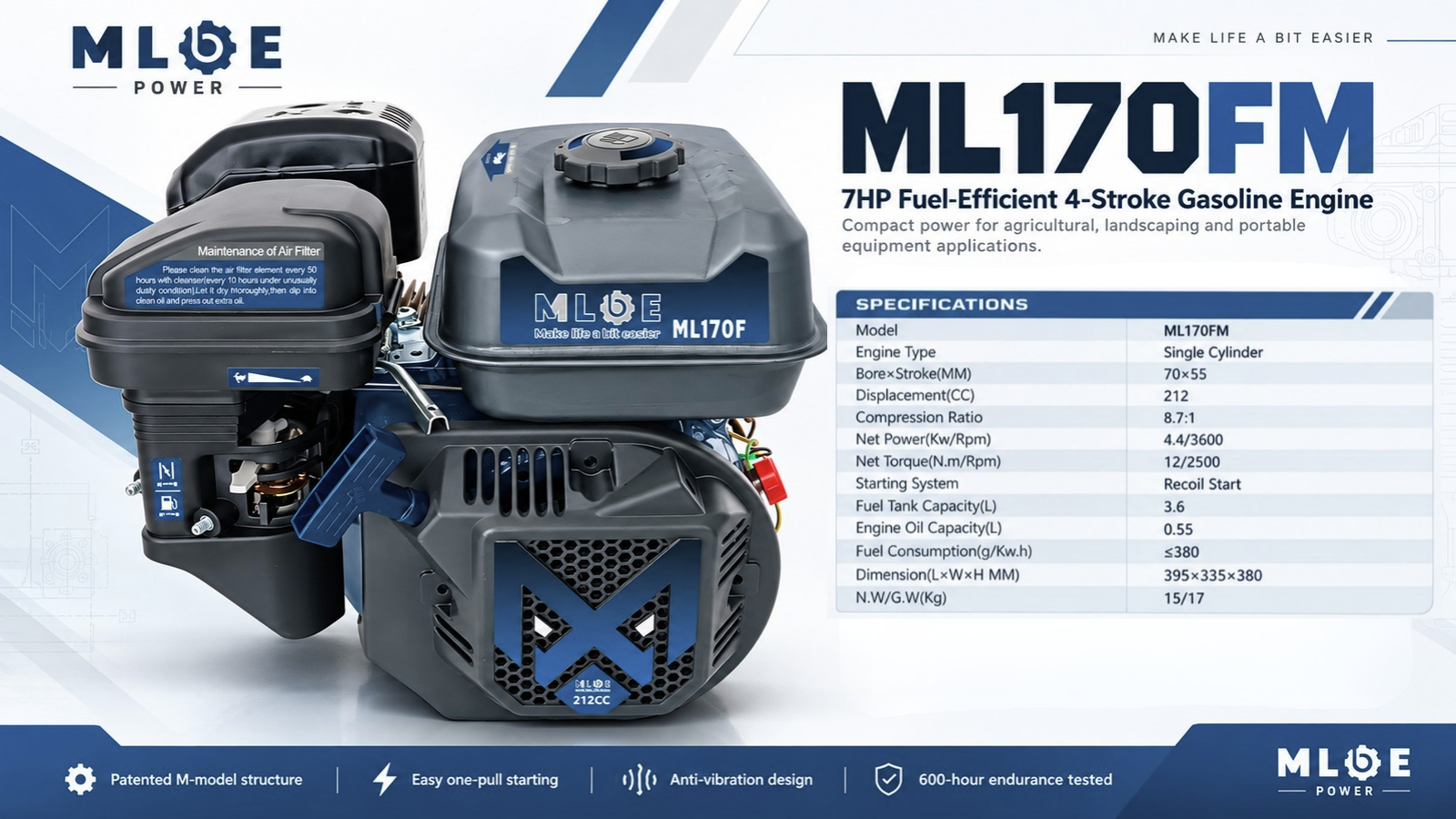
When auditing a potential supplier, request technical schematics and emissions data regarding their proprietary engines. Do they hold patents? Do they optimize fuel combustion for specific agricultural loads? For example, manufacturers that invest in proprietary technology, such as the patented MLBE ML170F-M 7HP Gasoline Engine, demonstrate an elite commitment to superior thermodynamics. By evaluating a factory’s engine architecture—such as their use of forged steel crankshafts, optimized cooling fins, and fuel-efficient carburetors—you can immediately gauge their engineering pedigree and long-term reliability.
2. Assess Product Line Innovation and Adaptability
Agriculture is not homogeneous. Soil types, topographies, and crop requirements vary drastically from the terraced rice paddies of Southeast Asia to the dryland orchards of Eastern Europe. A stagnant agricultural equipment supplier will only offer standardized, outdated models that fail to meet modern agronomic demands. Conversely, an innovative manufacturer continuously evolves its product matrix to solve specific regional challenges.
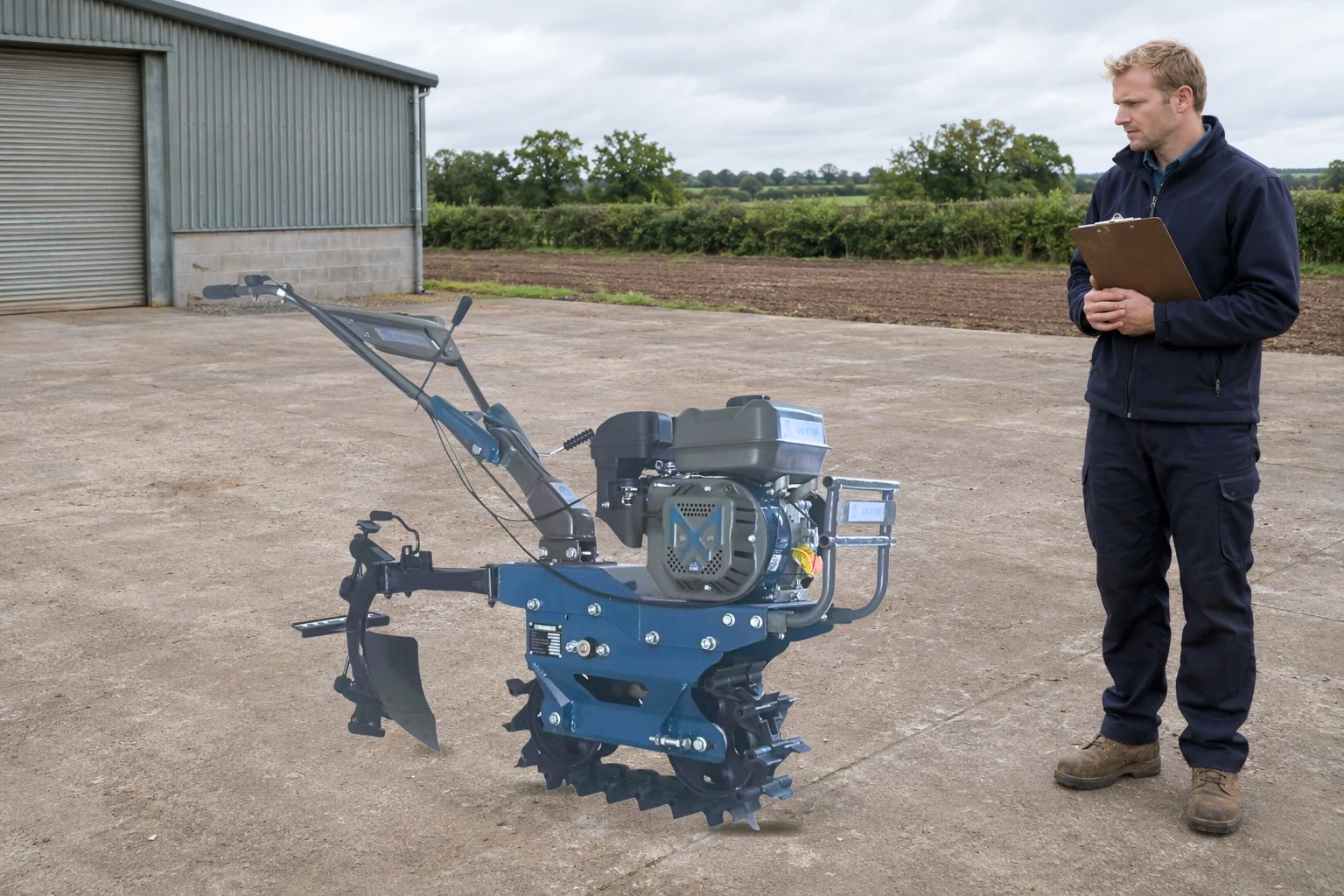
Compare wheeled and tracked configurations against the intended task, traction and stability requirements. For models such as MLBE ML-LG170F 212cc Gasoline Crawler Tiller, request the manufacturer’s permitted slope limits and operating restrictions for the exact machine and implement configuration, together with a demonstration or documented results in comparable ground conditions. Tracks alone do not establish suitability for deep mud, mountain terraces or steep, slippery slopes. Follow the operating instructions for the supplied model.
3. Supply Chain Stability and Parts Availability
In the agricultural sector, equipment downtime during a critical planting or harvesting window translates directly to financial ruin for the farmer. Therefore, your relationship with an agricultural machinery supplier does not end when the shipping container leaves the port; it only begins there.
Before signing an OEM (Original Equipment Manufacturer) or distribution contract, you must ruthlessly audit the supplier’s aftermarket support infrastructure. Ask the following questions:
- Do they manufacture their own gearboxes and transmission housings, or are they subject to third-party delays?
- Can they guarantee a 5-to-10 year supply of replacement parts for discontinued models?
- What is their lead time for urgent air-freight part replacements?
A reliable manufacturer will have a dedicated division for aftermarket support, ensuring that their distributors have immediate access to all necessary components to service the end-user effectively and uphold the brand’s reputation.
4. Metallurgical Quality Control and Manufacturing Standards
The longevity of soil-engaging machinery is dictated entirely by metallurgy. When visiting a factory or requesting virtual audits, focus heavily on their Quality Control (QC) processes for raw materials. The steel used in rotary blades, transmission gears, and main chassis frames must undergo strict hardening and tempering processes to withstand the immense torsional stress of tilling hardpan soils.
Ask for their ISO 9001 certification and specifically request documentation on their incoming material inspections (IQC). Top-tier factories utilize coordinate measuring machines (CMM) and spectrometer analysis to verify the exact carbon and alloy content of the steel before it ever reaches the assembly line.
Frequently Asked Questions
Q: Should I buy from a Chinese trading company or a direct manufacturer?
While trading companies might offer a wider variety of disparate products, a direct manufacturer offers superior quality control, deeper technical support, direct warranty fulfillment, and lower pricing by eliminating the middleman margin. For complex heavy machinery like tillers and engines, always seek a direct factory relationship.
Q: How important is CE or EPA certification if my country does not require it?
Extremely important. Even if your specific local market does not strictly enforce European (CE) or American (EPA) emission and safety standards, a manufacturer that possesses these certifications has proven their ability to meet the world’s most stringent engineering tolerances. It serves as an undeniable proxy for high manufacturing quality.
Ready to Source Premium Agricultural Machinery?
Evaluating international suppliers is a complex but highly rewarding endeavor when executed correctly. Finding a partner that combines thermodynamic engine expertise, heavy-duty metallurgy, and continuous R&D is the key to dominating your local agricultural market.
MLBE’s engineering and export divisions are ready to provide full technical disclosures, factory audit materials, and customized distribution strategies to serious B2B importers.
Contact MLBE Power today to discuss OEM manufacturing, bulk import pricing, and establishing a dominant agricultural mechanization supply chain in your region.
References
Food and Agriculture Organization (FAO) of the United Nations. (2014). A Regional Strategy for Sustainable Agricultural Mechanization.
Kienzle, J. et al. (2016). Role of agricultural mechanization in agricultural and economic development.