ML1350G: matching implements to the gearbox
What should I check before adding an implement?
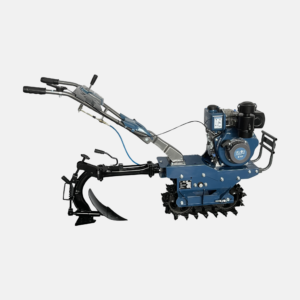
The description identifies an ML177F engine and a #32 gearbox. Request confirmation of the implement interface and permitted operating configuration for ML1350G; describe the field task rather than assuming fit from engine power alone.
Explore the gasoline power tiller range and MLBE power tiller selection guide. For configuration-specific documents, contact MLBE technical support.
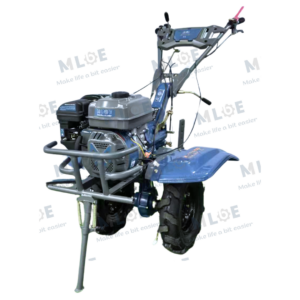
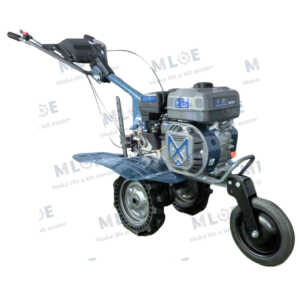
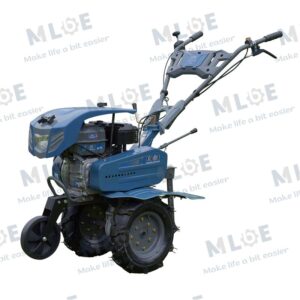
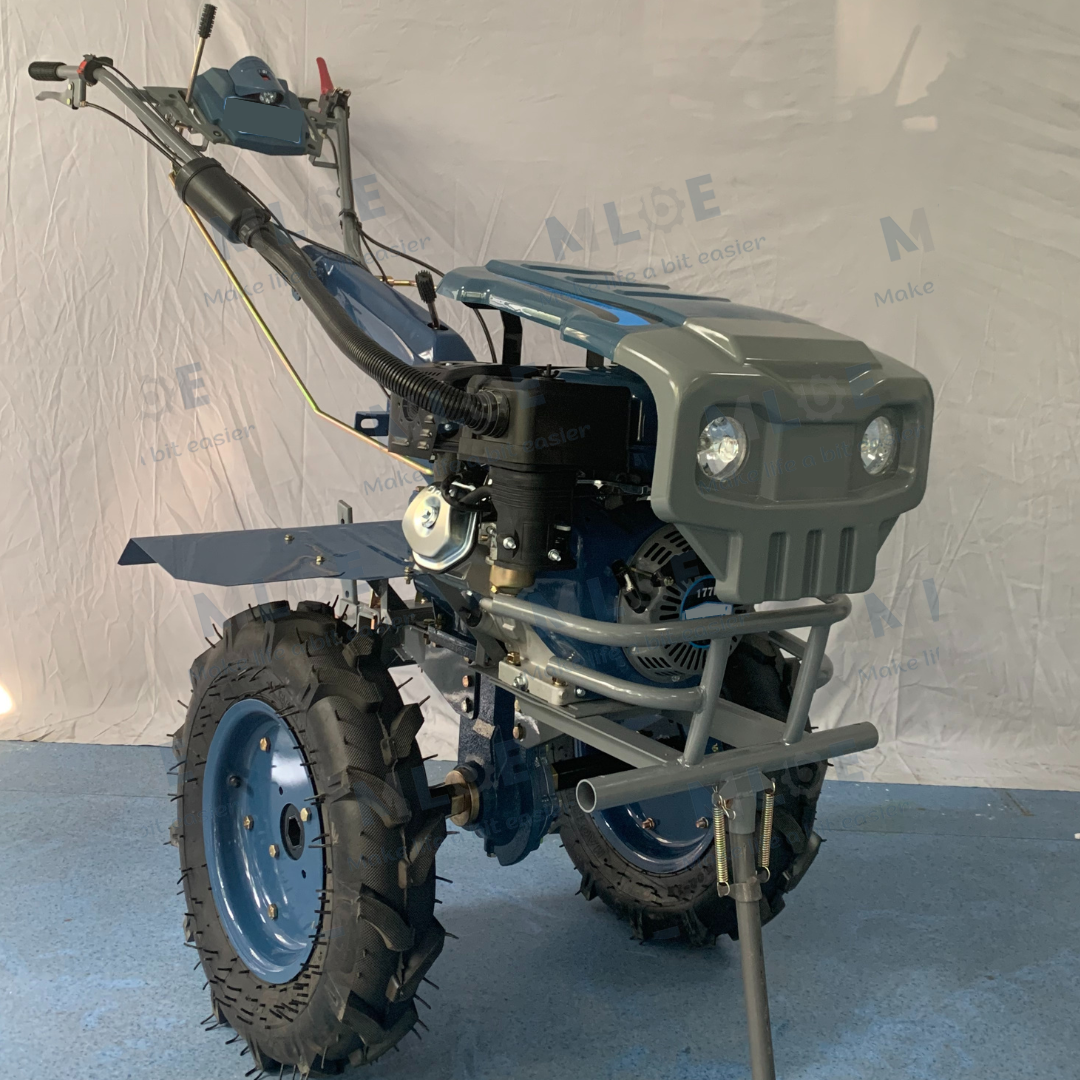
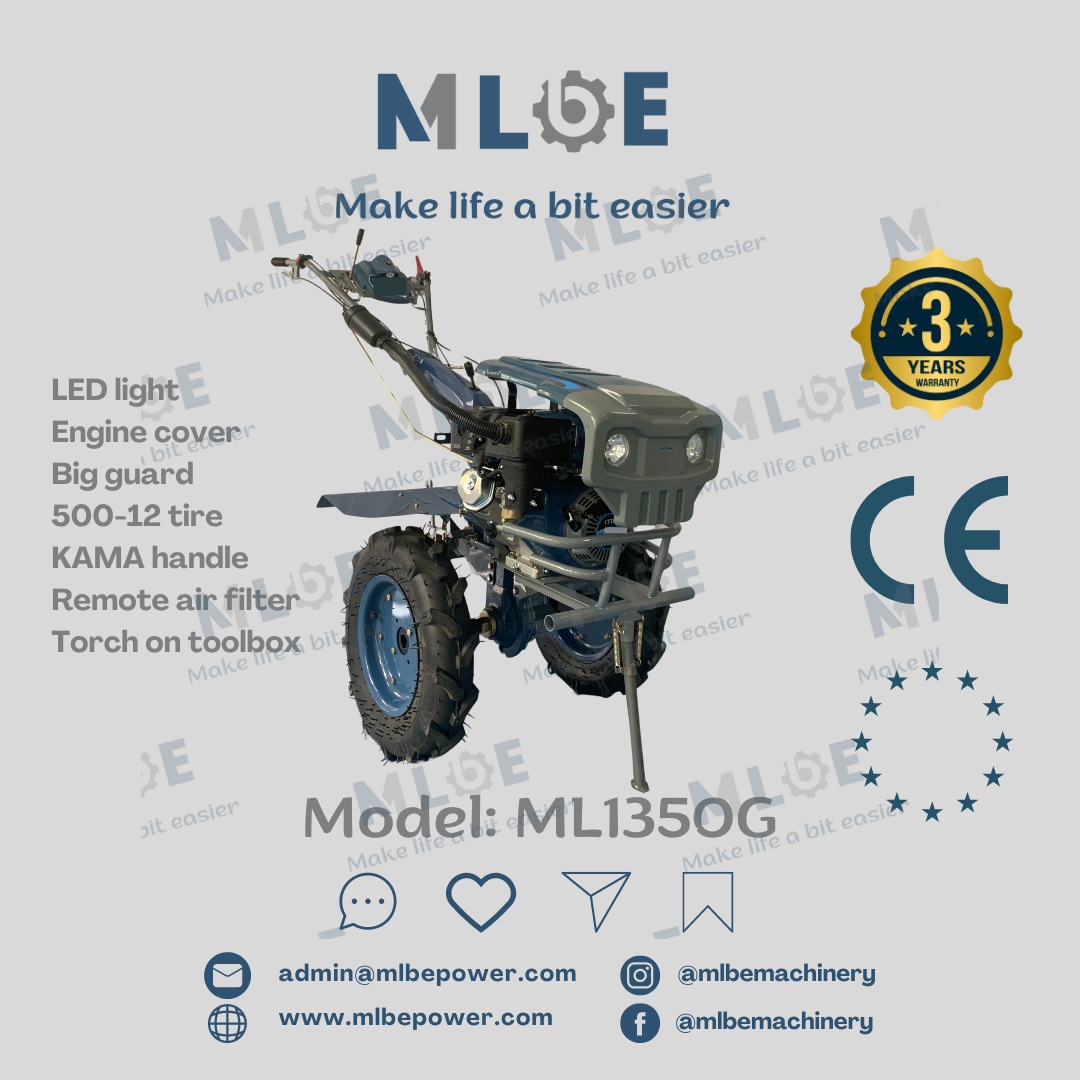
MLBE ML1350G 9HP Gasoline Power Tiller
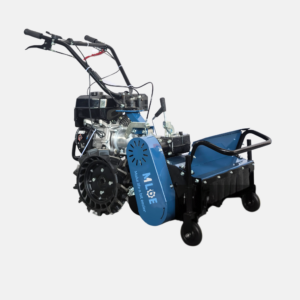
The MLBE ML1350G is a 9HP gasoline power tiller designed for heavier cultivation, seedbed preparation and regular agricultural soil work. Its ML177F engine, #32 gear-driven transmission and cast-iron gearbox provide a robust configuration for firmer or more demanding soil conditions.
Key Features
- ML177F 9HP gasoline engine operating at 3600 rpm
- #32 gear-driven transmission for direct power transfer
- Cast-iron gearbox for regular agricultural use
- KAMA-type handlebar designed for practical operator control
- Suitable for cultivation, soil loosening and seedbed preparation
Typical Applications
The ML1350G is suitable for farms, orchards, vegetable plots and larger cultivated areas where greater engine output and a heavier gear-driven platform are preferred. It can be used for primary soil loosening, repeat cultivation and preparation before planting.
For Importers and Dealers
Confirm the required working width, attachments, wheel configuration, packaging and spare-parts package before ordering. The final specification should be selected according to local soil conditions, crop requirements and the expected duty cycle.