
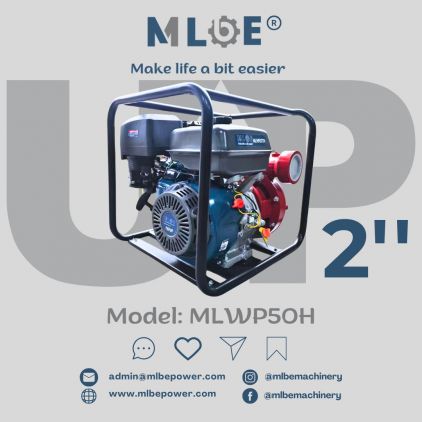
Types of Water Pump Machines: Centrifugal, High-Pressure, Trash and Fire Pumps
Water pumps should be selected by the liquid, required flow and operating head. Labels such as centrifugal, high-pressure, trash, petrol and diesel describe different aspects of a machine, so they are not mutually exclusive categories. A petrol-powered trash pump, for example, may also use a centrifugal design.
What Is a Centrifugal Water Pump?
A centrifugal pump uses a rotating impeller to transfer energy to the liquid. Many portable clean-water, high-pressure and trash pumps use this principle, with different impellers, housings and clearances. Check the model’s permitted liquids and performance curve before choosing it.
General-Purpose Clean-Water Pumps
These models are intended for water transfer within their specified limits. Irrigation, tank filling and drainage requirements differ, so compare flow at the required head. Do not assume that a clean-water pump can pass stones, fibres or sediment without damage.
High-Pressure or High-Head Pumps
High-pressure pumps are designed for applications requiring more pressure or head than a comparable general-purpose transfer pump can provide. They may also be centrifugal pumps. Compare the complete curve: higher maximum head does not guarantee the required flow at the end of a long hose or irrigation line.
Trash and Solids-Handling Pumps
A trash pump is designed for specified solids-handling conditions. Confirm the maximum solids size, permitted liquid and any limits on abrasive or fibrous material. “Trash pump” does not mean it can handle every kind of mud, chemical or debris. Use the correct strainer and follow the cleaning procedure.
Firefighting Applications Require Specific Verification
A high-pressure water pump is not automatically suitable for a firefighting system. The required flow, pressure, reliability, accessories and applicable approval requirements must be checked for the intended use. Seek qualified advice for an emergency installation and obtain evidence for the exact equipment configuration.
Petrol or Diesel Power?
Compare the MLBE petrol water pump range and diesel water pump range by engine specification, starting system, weight, fuel use under stated conditions and service support. Neither fuel type alone proves lower running costs, longer life or suitability for continuous operation.
Aluminium, Cast Iron and Pump Compatibility
Housing material affects weight and construction, but it does not establish chemical resistance or solids-handling capability on its own. Check the impeller, seals and all wetted materials against the liquid. Use the manufacturer’s compatibility information rather than a broad claim that one metal suits all demanding conditions.
Five Questions Before Selecting a Model
| Question | Why it matters |
|---|---|
| What liquid and solids will be pumped? | Determines the required compatibility and solids-handling limits. |
| What flow is needed at the delivery point? | Defines the duty point to check on the pump curve. |
| What total head must be overcome? | Includes elevation, required delivery pressure and pipe or hose losses; it is not just vertical lift. |
| What are the suction conditions? | Source level, hose arrangement and airtight connections affect operation. |
| How will the pump be operated and serviced? | Determines transport, fuel, documentation and spare-parts requirements. |
Maximum flow and maximum head are separate ratings and should not be assumed to occur together. Confirm the proposed operating point, installation and liquid with the supplier.
Find the Relevant MLBE Range
Chongqing MLBE Mechanical & Equipment Co., Ltd. supplies engine-driven pumps for international equipment buyers. Browse the water pump category, read the agricultural pump selection guide, or send your liquid, required flow and hose layout to MLBE.