
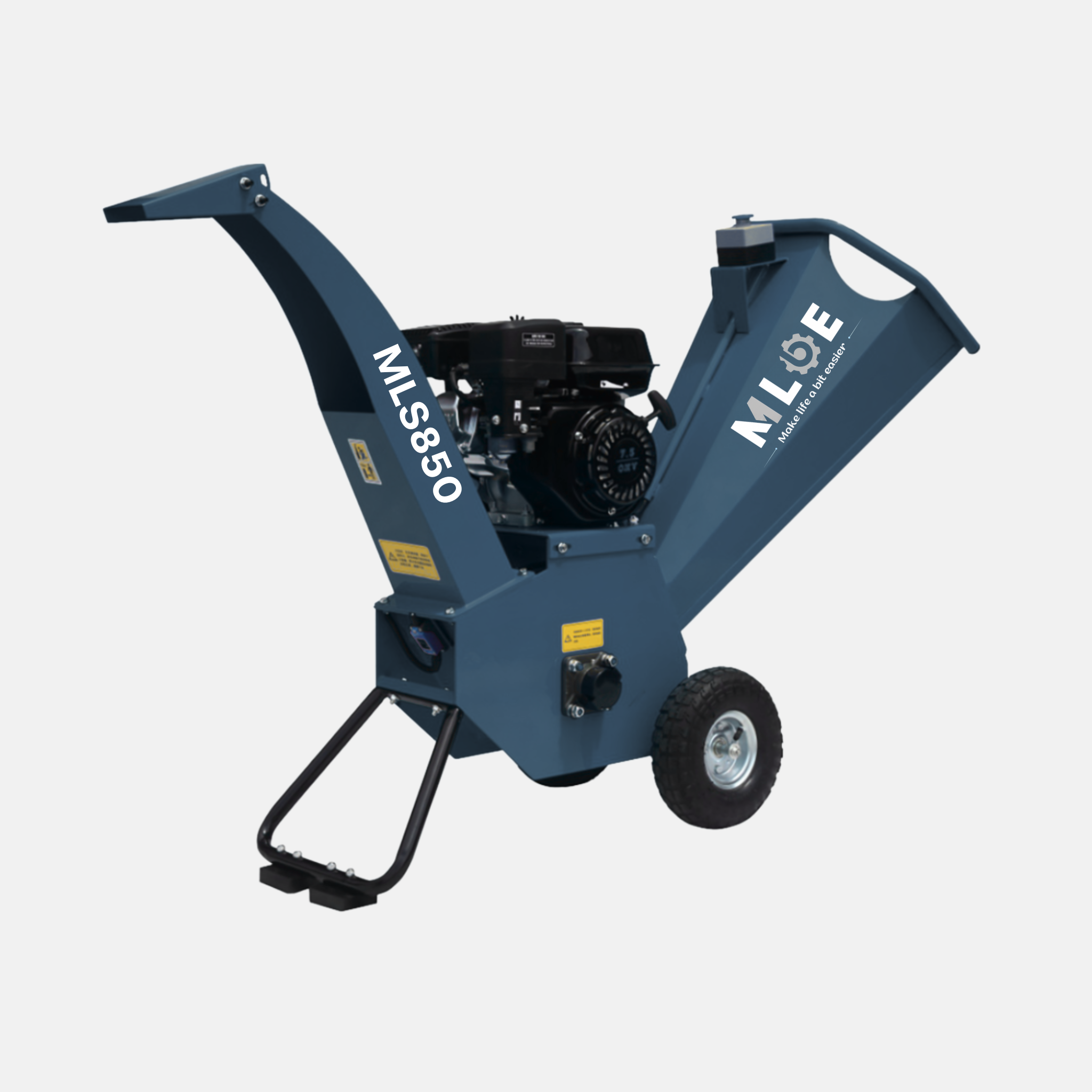
Wood Chipper Selection for Importers: Capacity, Feed Size and Engine Choice
For a wood chipper importer, the most important question is not simply “how many horsepower?” It is what material the machine needs to process, how often it will work, and what branch diameter dealers can realistically promise to customers.
This selection guide focuses on capacity, feed size, engine choice, starting system and workload so importers can build a range that is easier to sell and support.

Branch Diameter Is the First Filter
Nominal chipping capacity is the quickest way to separate product classes. MLBE’s current gasoline range covers approximately 76 mm, 89 mm, 100 mm and 120 mm capacities, while the diesel range includes 70 mm, 90 mm and 100 mm options.
However, maximum diameter is not a guarantee that every branch of that size will feed at the same speed. Wood species, moisture, branch shape, knots and operator technique all affect real performance. Dealers should present the published diameter as a model-selection reference rather than a universal production claim.
Choose the Engine Around Workload, Not Marketing
Smaller gasoline models suit lighter garden, orchard and property-maintenance work where portability and easy starting matter. Larger gasoline or diesel models make more sense when customers regularly process thicker material or expect longer duty cycles.
The MLBE MLG gasoline series ranges from 6.5HP to 15HP depending on model. The MLD diesel series also provides several power and capacity levels for buyers comparing heavier-duty configurations.
Feed Opening and Branch Shape Matter
A headline cutting diameter does not describe the whole feeding experience. Importers should also confirm the feed opening, feed angle and whether heavily branched material needs trimming before insertion.
For landscaping dealers, orchard contractors and property-maintenance businesses, a machine that accepts awkward branch shapes more easily may be commercially more useful than a model with a slightly larger nominal diameter.
Gasoline or Diesel?
| Consideration | Gasoline chipper | Diesel chipper |
|---|---|---|
| Typical positioning | Garden, orchard and mobile property work | Higher-duty agricultural or contractor use |
| Starting | Recoil or electric depending on model | Recoil or electric depending on model |
| Weight | Often lighter in comparable classes | Often heavier |
| Dealer message | Portability and practical branch processing | Torque, duty cycle and heavier workload |

Do Not Ignore Blade Speed and Transmission
Blade speed, belt arrangement and clutch design influence how the machine transfers engine power to the cutting system. Importers should confirm these details before comparing quotations because two machines with similar engine power can use different cutting and transmission layouts.
For long-term dealer support, also record blade references, belts, bearings and other wear components so the after-sales team can identify the correct parts without relying only on photos.
Safety and Dealer Training Should Be Part of the Order
Wood chippers process fast-moving material and require disciplined operation. Dealers should provide clear operating instructions, PPE guidance, feed procedures and shutdown information with the machine. Never build the sales message around maximum capacity alone.
For commercial distribution, the importer should also confirm warning labels, guards, emergency procedures and any target-market requirements before production.
How to Build a Chipper Range
A simple dealer range is usually easier to manage than several overlapping models. One practical structure is:
- compact model: for gardens and lighter branch material,
- mid-capacity model: for orchards and landscaping contractors,
- higher-capacity model: for buyers processing thicker material more regularly.
This gives sales staff a clear upgrade path while keeping spare-parts and inventory complexity under control.
Importer Checks Before a Bulk Order
- Confirm realistic branch diameter for the target customer.
- Compare feed opening and branch shape requirements.
- Match engine and starting system to workload.
- Record blade, belt and wear-part references.
- Confirm net/gross weight and packaging.
- Prepare operating and safety information for dealers.
- Agree on spare-parts support before shipment.
Wood Chipper Specification Approval for Importers
For a commercial shipment, the declared maximum branch diameter should not be treated as a guaranteed continuous processing capacity. Performance depends on the exact model, feed material, moisture, blade condition and operating procedure. Compare like-for-like test conditions and request documentation for the configuration you intend to distribute.
| Approval item | What to verify |
|---|---|
| Feed material | Permitted branch diameter, hardness, moisture and materials excluded by the manual. |
| Cutting and feed system | Feed opening, blade type, blade replacement parts and any fitted feed controls. |
| Power and workload | Engine specification, stated test conditions and service needs for the intended duty. |
| Operator protection | Guards, safety controls, instructions and requirements applicable to the destination market. |
| Dealer readiness | Spare blades, bearings, belts if fitted, manuals, packing dimensions and warranty arrangements. |
Before ordering, agree on a sample or representative inspection method for the actual model. Do not promise unverified throughput or materials compatibility. MLBE can discuss OEM branding and a standard agricultural machinery MOQ of 20 units, subject to configuration, sample approval and written quotation.
MLBE Wood Chipper Resources
View the current MLBE Wood Chippers & Shredders range, then compare individual gasoline and diesel model specifications. For documentation and service information, use the Catalogue & User Manual and Technical Support.
Importers can contact MLBE with target branch size, material type and expected workload to discuss the most suitable range.