
Inverter vs Conventional Petrol Generator: What Should Indian Dealers Stock?
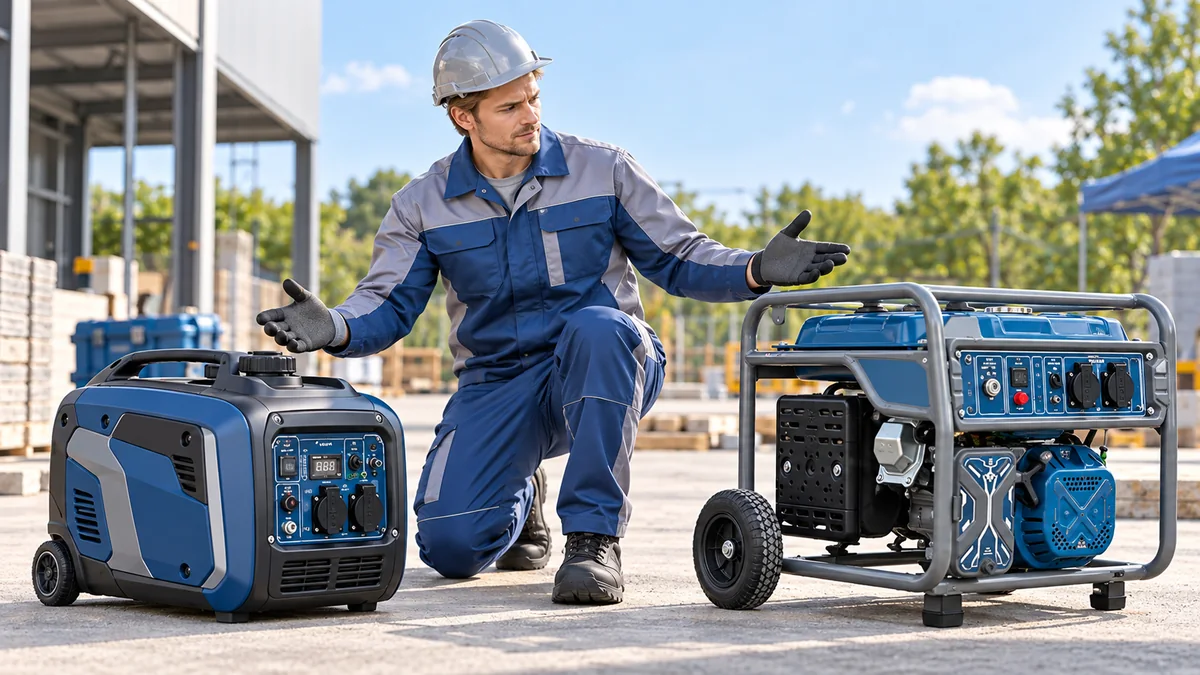
When comparing an inverter versus a conventional petrol generator, start with the customer’s loads and operating needs. A compact portable inverter generator can suit buyers prioritising portability and documented power quality; an open-frame conventional model can suit a range built around straightforward servicing, tank capacity and output requirements. Confirm those advantages against the actual models.
Quick buying checklist: Neither is universally superior. Check rated output, starting loads, measured noise, total harmonic distortion (THD) and voltage/frequency for the supplied model. Compare the MLBE ML2500iS inverter generator with the ML2500 conventional series before choosing stock.
Both formats can run on petrol, also called gasoline. Here, “inverter generator” means an engine-powered generator with electronic power conditioning, rather than a standalone battery inverter. The comparison below helps importers decide which portable gasoline generators to include in a dealer range.
How Does a Conventional Petrol Generator Work?
A conventional portable generator uses an engine to drive an alternator and produce AC electricity. Depending on the generator, an Automatic Voltage Regulator, or AVR, may help control voltage.
Conventional petrol generators are commonly built in open frames and can be suitable for customers prioritising practical output, durable frame construction, long runtime, work-site use, business backup and rural applications.
The MLBE ML2500 Series is an example of this conventional format.
How Does an Inverter Petrol Generator Work?
An inverter generator uses additional power electronics to condition the generated electricity. In simplified terms, electricity is generated, converted and electronically reconstructed into stable AC output.
This allows inverter generators to deliver cleaner power with low total harmonic distortion. For equipment containing sensitive electronics, this can be an important selling point.
THD: An Important Difference
THD means Total Harmonic Distortion. It describes distortion in the electrical waveform.
For distributors selling generators to customers powering electronic equipment, THD can be an important technical specification. The MLBE ML2500iS inverter generator is positioned as a low-THD portable inverter option.
Noise Can Define the Customer Segment
Noise is one of the clearest reasons why some buyers prefer an inverter generator. A dealer serving customers who value quieter operation may therefore position an inverter model differently from a traditional open-frame generator.
Potential markets can include mobile businesses, outdoor activities, events, small backup applications, customers using sensitive electronics and buyers who need easier transport.
Noise figures should always state the measurement condition or distance where available. Avoid comparing two dB figures if they were measured using different test methods.
Small Inverter Generator or Conventional Portable Model?
Compare actual specifications at the same rated load. MLBE’s published data provides a useful example of how two compact petrol generator formats differ:
| Specification | ML2500iS inverter | ML2500 series conventional |
|---|---|---|
| Rated AC output | 2.0 kW | 2.0 kW at 50 Hz / 2.3 kW at 60 Hz |
| Maximum AC output | 2.2 kW | 2.2 kW at 50 Hz / 2.5 kW at 60 Hz |
| Net weight | 22 kg | 41.5 kg |
| Fuel tank | 4 litres | 13 litres |
| Published runtime at 50% load | Around 6 hours | Up to 12 hours |
Sources: ML2500iS portable inverter generator specifications and ML2500 series portable gasoline generator specifications. Confirm the current data sheet for the ordered configuration.
The ML2500iS is the lighter option in this comparison; the ML2500 series has the larger tank and longer stated half-load runtime. Runtime alone does not establish fuel efficiency: tank size, electrical load and test conditions must also be considered. Calculate motor starting demand separately from running power before selecting either model.
Power Range
Another reason to stock both formats is product segmentation.
Small inverter units often compete strongly on quiet operation, portability, clean power and convenience. Larger conventional models can compete on higher power ranges, value per unit of output, business backup and longer fuel storage capacity.
MLBE’s larger conventional petrol generator family extends into higher-output configurations. See the MLBE ML10000(E) gasoline generator range for an example.
A Possible Dealer Product Mix
| Dealer Segment | Possible Generator | Key Selling Point |
|---|---|---|
| Budget portable | 2–3 kW conventional | Practical price and general use |
| Premium portable | Approx. 2 kW inverter | Quieter, compact, low THD |
| Business backup | 5–6 kW conventional | Higher output and long runtime |
| Higher-demand use | 7–9 kW conventional | Additional load capacity |
This does not mean every dealer needs all four segments. A distributor serving agricultural dealers may choose differently from one selling through urban power-equipment retailers.
Which Generator Is Easier to Repair?
Serviceability should be considered before deciding which products to import. Conventional generators can have relatively straightforward mechanical and electrical systems, while inverter generators add electronic control components.
For dealers, this makes access to parts diagrams, inverter modules, carburettor components, ignition components, switches, engine parts and technical support particularly important.
Which One Offers Better Dealer Margin?
There is no universal answer. Margin depends on supplier price, freight cost, duties and taxes, market positioning, competitor pricing, warranty cost, service cost, retail channel and stock turnover.
Compare the expected contribution per unit after landed cost, sales-channel costs and a warranty allowance. Then assess likely sales volume, stock turnover and service capacity; a higher markup alone does not establish the stronger product choice.
Match the Format to the Buying Requirement
| Customer priority | Compare before selecting either format |
|---|---|
| Electronic equipment | Device supply requirements and documented generator voltage, frequency and THD under relevant loads. An inverter label is not a compatibility guarantee. |
| Motors or compressors | Running demand, starting current and the generator’s documented transient capability. AVR or inverter control does not replace load sizing. |
| Long operating periods | Permitted duty, fuel consumption and runtime at the same electrical load, with tank size stated separately. |
| Frequent transport or noise limits | Actual weight, handles and dimensions; comparable noise results with measurement distance, load and method. |
| Local service support | Engine and electrical parts, diagnostic procedures and technician capability for the quoted configuration. |
Use the ML2500iS inverter model and ML2500 conventional series as separate comparison entries. Record the exact voltage, frequency and configuration on each quotation, then request any evidence missing from the published specification.
Questions Dealers Should Ask Before Choosing
- Rated and maximum power
- Voltage and frequency
- THD where relevant
- Noise data and test distance
- Runtime and test load
- Fuel tank capacity
- Engine displacement
- Net and gross weight
- Package dimensions
- Starting system
- Spare-parts availability
- Warranty procedure
- Production lead time
Once you have chosen the format, compare the wholesale quotation and landed-cost items. If the generators will carry your own brand, the OEM petrol and gasoline generator guide covers specification approval, branding and spare-parts identification.
Related Wholesale and Dealer Planning
Dealers comparing inverter and conventional formats should also consider how the products fit into a broader inventory strategy. MLBE’s Wholesale Petrol Generators from China guide covers product mix, landed cost and stock planning, while Petrol Generators for Indian Dealers focuses on building a practical range for different customer groups.
So, Which Should You Stock?
For many distributors, the strongest answer is not inverter or conventional. It is using each category for the customer segment it serves best.
A compact inverter petrol generator can create a premium portable offering. A conventional generator range can cover customers requiring longer runtime and higher output. The resulting portfolio gives dealers more ways to match customer applications without competing solely on price.
For the broader sourcing strategy, read the Petrol Generator Buying Guide for Indian Importers and Dealers.
Explore the MLBE gasoline generator range, review the petrol generator supplier page for India, or contact MLBE to discuss a distributor product mix.
Compare Real MLBE Generator Videos
See the ML2500iS inverter petrol generator alongside the separately labelled ML2500-M petrol generator. The product names describe different configurations and should not be used as an electrical test comparison. Ask for voltage, frequency, continuous output, noise and load-test evidence for the quoted units.
Explore the generator model range, then check the technical resources centre and model-relevant certificates and test reports. You can also review dealer/OEM supply options before planning stock; verify electrical ratings against the quoted configuration.
Portable Generator Comparison FAQ
Is the ML2500iS a 2kW or 2.2kW inverter generator?
Its published specification is 2.0 kW rated AC output and 2.2 kW maximum AC output. For a 2000 watt inverter generator enquiry, specify continuous rated output and identify any loads with additional starting demand.
Does a small inverter generator suit every electronic device?
No single rating establishes compatibility with every device. Compare the equipment manufacturer’s supply requirements with the generator’s voltage, frequency, continuous output, starting capacity and documented power quality.
Are inverter generators better than conventional generators?
They offer different advantages. Inverter generators are attractive for portability, noise and clean power, while conventional generators can be suitable for general-purpose and higher-output applications.
What is THD on an inverter generator?
THD means Total Harmonic Distortion and measures distortion in the electrical waveform.
Are inverter generators lighter?
Many portable inverter designs are more compact and lighter than comparable open-frame conventional generators, although specifications vary by model.
Should a dealer stock both?
For dealers serving multiple customer segments, carrying both can create clearer entry-level, premium and higher-output product categories.